IHDUA's Skill Development Programme focuses on providing employment-oriented and self-employment-oriented vocational training, with particular emphasis on rural youth, both men and women, and women from economically weaker sections of society.
The programme aims to enhance practical skills, improve employability, promote entrepreneurship and create sustainable livelihood opportunities.
The major skill development courses offered by the organization include:
• Tailoring and Garment-Making Training for Women.
• Aari Embroidery Training for Women.
• General Duty Assistant (GDA) Training for Youth.
• Computer Training.
• Spoken English Training.
• Vision Assistant Training.
• Thanjour painting Training.
• Lippan Art Training.
1. Tailoring Training Programme
One of the primary objectives of IHDUA is to enable women to become economically independent and contribute towards their family income. Through skill development, the organization also aims to build self-confidence among women and strengthen their ability to face various challenges in life.
With this vision, IHDUA initiated its Tailoring Training Programme, through which thousands of women have acquired practical tailoring skills and developed the ability to earn their livelihoods independently.
Initially, the programme was implemented with a focus on Begur Hobli. Over the last three years, it has been expanded to cover both Gundlupet town and surrounding rural areas.
The major beneficiaries of this programme are women from IHDUA's own Self-Help Groups (SHGs) and other women belonging to their families and communities.
Several women who have completed the training have successfully established their own tailoring centres and are also providing employment opportunities to other women. These success stories demonstrate the programme's contribution to women's economic empowerment and self-reliance.
Establishment of a Garment Manufacturing Unit
Considering the thousands of women who have successfully completed tailoring training and recognizing the need to provide them with sustainable employment opportunities, the Founder Chairman of IHDUA, Dr. B. S. Ajaikumar, has taken the initiative to establish a Garment Manufacturing Unit.
The primary objective of this initiative is to create direct employment opportunities for trained women, provide them with a platform to utilize their acquired skills and enable them to earn a regular income.
Through this initiative, IHDUA aims to bridge the gap between skill development and employment by transforming trained women into economically independent individuals and creating sustainable livelihood opportunities within the local community.
2. Aari Embroidery Training Programme
In addition to tailoring training, IHDUA provides Aari Embroidery Training to women with the objective of equipping them with advanced skills and creating opportunities to increase their income.
Aari Embroidery is an innovative and specialized skill that has gained significant demand in the present market. Through this programme, women are trained in embroidery techniques that enable them to take up self-employment, establish their own businesses and explore opportunities in the garment and fashion industry.
Recognizing the quality and effectiveness of IHDUA's training programmes, NABARD (National Bank for Agriculture and Rural Development) has also extended financial support for this training initiative.
Several women who have completed the training have successfully increased their income, while many have gone a step further and established their own embroidery shops and boutiques.
This programme is helping women develop specialized skills, achieve financial independence and establish sustainable livelihood opportunities.
3. Computer Training Programme
Along with vocational and self-employment-oriented skill development programmes, IHDUA also provides computer training to rural youth, both men and women, to improve their employability and digital literacy.
The programme goes beyond basic computer education by incorporating additional skills essential for personal and professional development.
The training includes:
• Basic Computer Education and Digital Skills.
• Spoken English and Communication Skills.
• Life Skills and Personality Development.
• Basic Workplace and Employment Readiness Skills.
Through this integrated approach, the organization aims to prepare rural youth to access better employment opportunities, pursue higher education and confidently participate in the growing digital economy.
4. General Duty Assistant (GDA) Training Programme
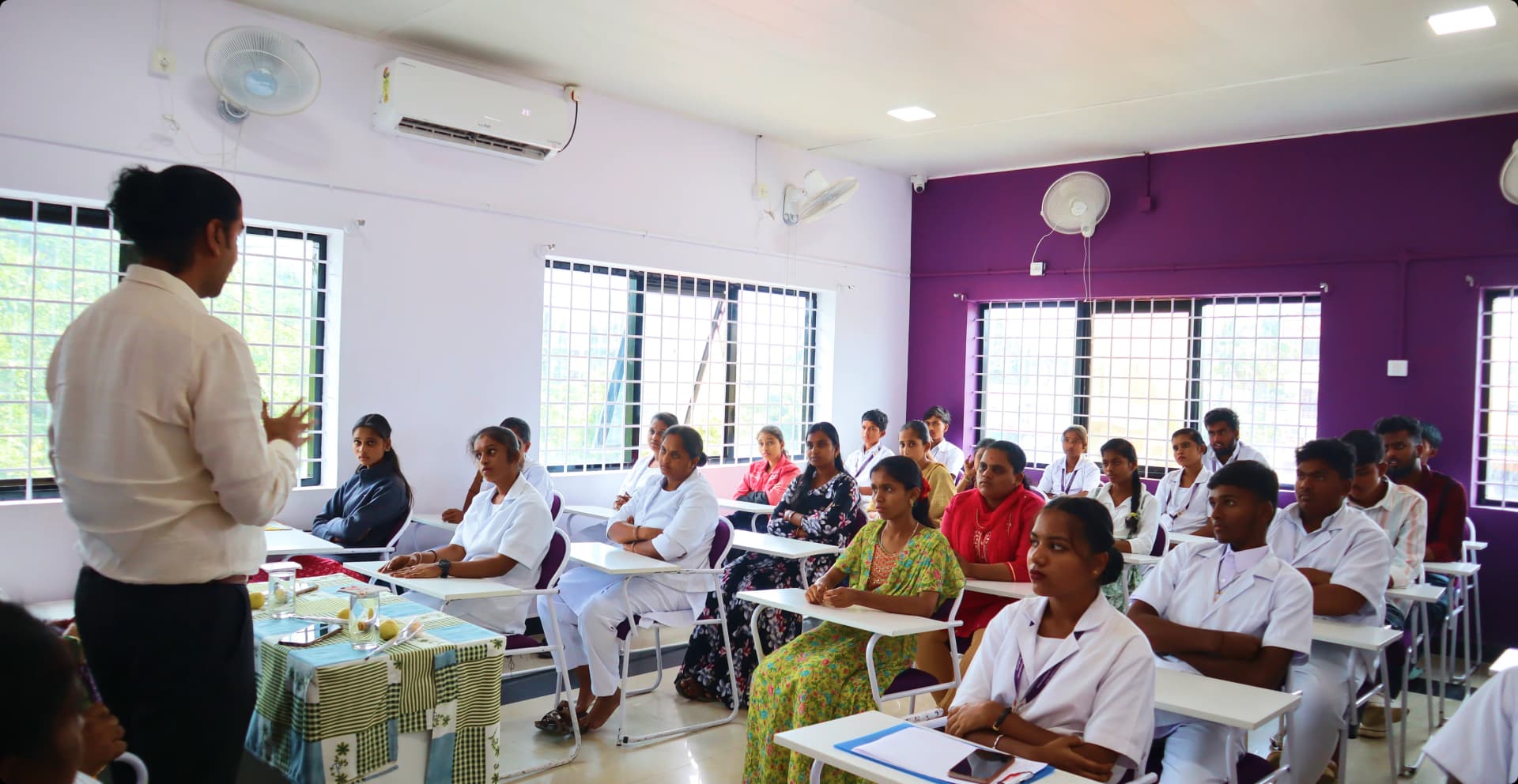
IHDUA conducts General Duty Assistant (GDA) Training for young men and women above 18 years of age who have discontinued their education after SSLC or PUC.
The primary objective of this programme is to provide healthcare-related vocational skills and create employment opportunities for young people who have limited access to higher education and professional training.
Through structured training, participants acquire the necessary knowledge and practical skills to work in hospitals, healthcare institutions and home healthcare services.
By connecting trained candidates with employment opportunities, the programme aims to build self-confidence, develop a positive attitude towards work and enable young people to become financially independent.
It also helps them contribute to their family income and improve the overall economic condition of their households.
Model Village Development Programme
The Model Village Development Programme is an integrated rural development initiative aimed at transforming one of the most backward villages into a model of comprehensive and sustainable development over a period of five to six years.
The programme focuses on improving all major aspects of village life, including:
• Economic Development.
• Social Development.
• Healthcare and Nutrition.
• Education.
• Environmental Sustainability.
• Basic Infrastructure and Essential Facilities.
The vision is to develop a village where people experience significant improvements in their quality of life and where the community stands out as an example of holistic rural development.
This initiative is one of the important programmes envisioned by Dr. B. S. Ajaikumar as part of his broader vision for rural development. His belief is that when rural farmers and farming communities become economically self-reliant, they create a strong foundation for the development of the entire society.
The success of the Model Village Programme largely depends on the active participation, ownership and involvement of the local community.
Initial Implementation – Chikkahundi Village
Initially, Chikkahundi village, located near Begur, was selected for implementing the Model Village Development Programme.
The organization initiated activities to understand the village's development needs, create awareness among the residents and encourage them to become active participants and beneficiaries of the programme.
However, despite continuous efforts for nearly one year, several local challenges and circumstances made it difficult to continue the programme in the village.