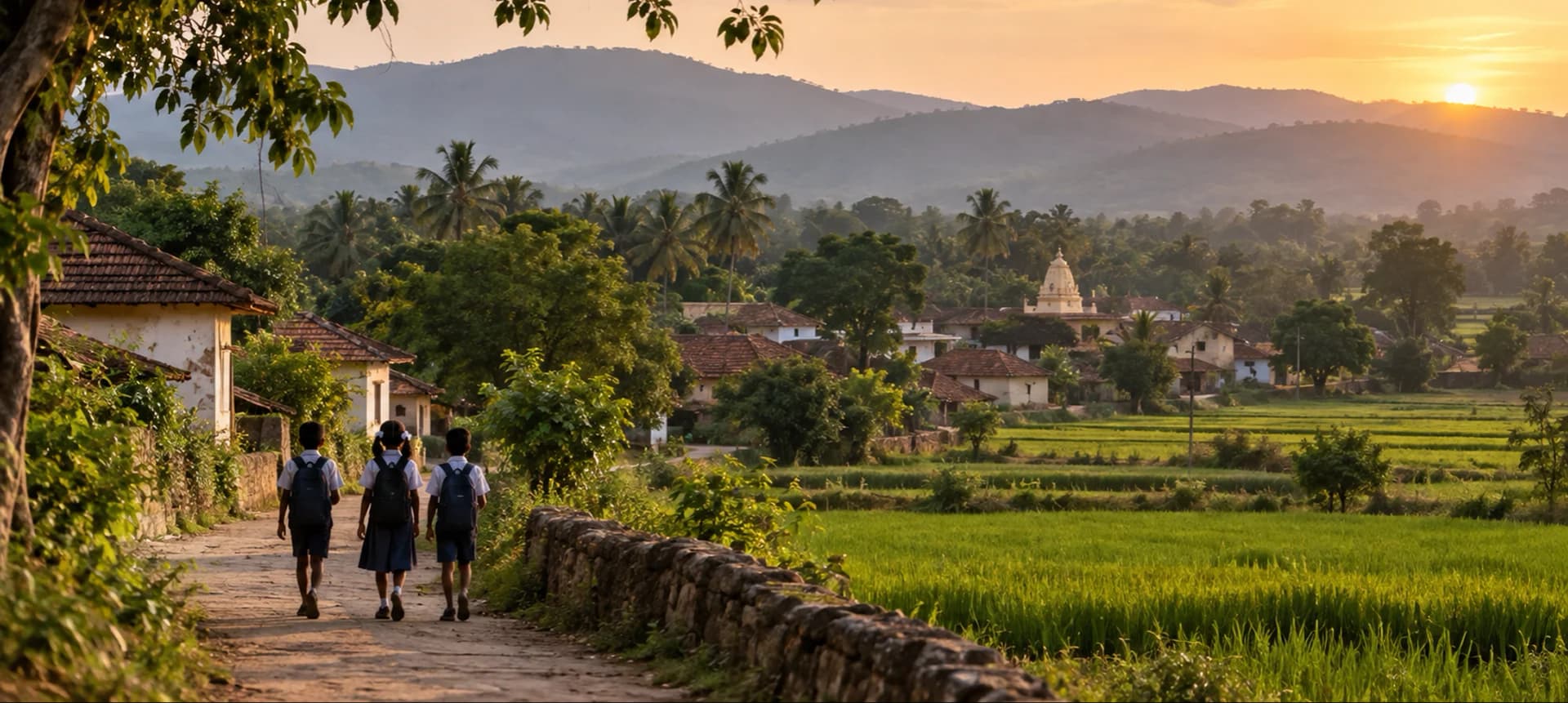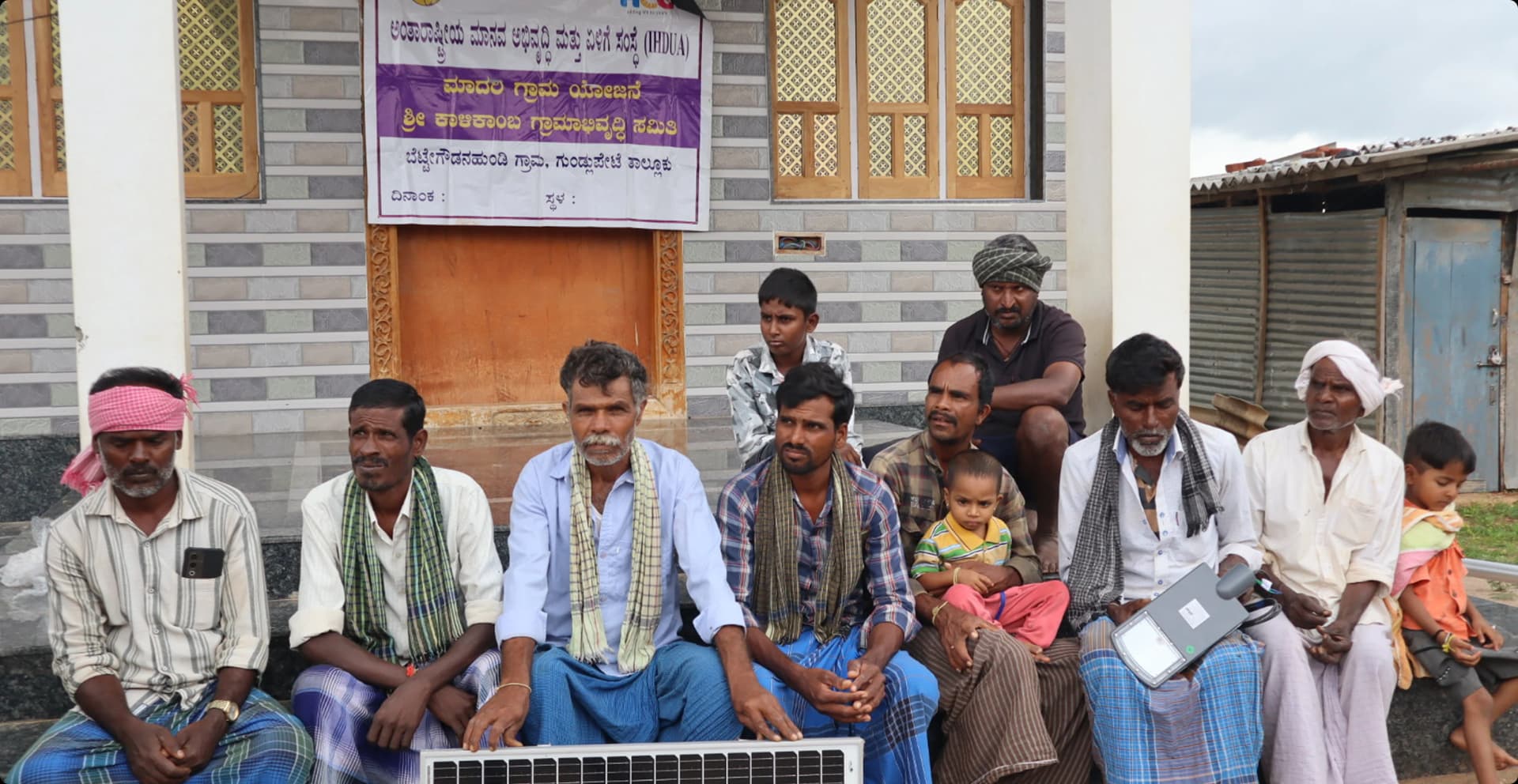
Subsequently, IHDUA identified Bettegowdanahundi village, located near Gundlupet, as the next implementation area.
The village was selected because of its highly backward conditions, complete dependence on dryland agriculture and limited access to essential government facilities and basic infrastructure.
Village Profile:
• Total households: 54.
• Households dependent on rain-fed agriculture: 52.
• Limited public transport connectivity, with no direct bus connectivity to the taluk headquarters.
• The Anganwadi centre does not have its own building.
• Inadequate road connectivity.
• Absence of a proper drainage system.
• Nearly 90% of households do not have toilets.
• A majority of families depend on dairy farming for their livelihoods.
• Poor health indicators, particularly among women, with a significant number suffering from anaemia.
These conditions highlighted the need for a comprehensive development intervention addressing the village's economic, social, health and infrastructure-related challenges.
Programme Implementation Approach
In the initial phase, IHDUA conducted a household-level survey to understand the socio-economic conditions, livelihood patterns, health status and basic infrastructure requirements of the village.
Based on the findings, the organization prepared development plans addressing the most urgent needs of the community.
1. Health and Nutrition Improvement
The organization initiated health awareness activities to improve the overall health conditions of village residents.
Special emphasis was placed on improving food habits, understanding the importance of balanced nutrition and encouraging families to consume nutritious food.
Women and families were motivated to establish kitchen gardens near their homes to grow green leafy vegetables and other nutritious vegetables for household consumption.
Necessary guidance and support were provided to encourage these activities.
2. Household-Level Health Awareness
IHDUA initiated regular door-to-door visits to create awareness about preventive healthcare, nutrition, hygiene and healthy lifestyle practices.
Health camps were also organized to identify health concerns and provide necessary assistance to village residents.
3. Economic Empowerment through Self-Help Groups
During the initial assessment, the organization identified that several families were trapped in debt cycles due to loans taken from microfinance institutions, creating considerable difficulties in managing their household expenses.
To address this issue, IHDUA initiated the formation of Self-Help Groups to promote savings, financial awareness and collective economic activities.
Through these groups, the organization has started facilitating access to formal banking services and affordable credit facilities.
The objective is to help families move away from excessive dependence on high-cost loans and encourage them to undertake income-generating activities that improve their financial stability.
The Model Village Programme aims to bring sustainable improvements to the village by addressing its development challenges through community participation and integrated interventions.